When is Anxiety in Children a Problem?
Every child feels scared or worried sometimes. That’s normal and healthy.
The real question isn’t “Does my child feel anxious?”
It’s “Is this anxiety getting in the way of their life and our family’s ability to function and connect?”
Normal childhood fears:
Follow predictable stages (fear of the dark, monsters, tests, strangers)
Improve with your comfort, routine, and time
Don’t control school, friendships, or family plans
Anxiety that needs attention:
Doesn’t fade with reassurance or time
Spreads into more areas (from school to sleepovers to everyday activities)
Interferes with daily life—school refusal, constant meltdowns, isolation
Starts to run the family—you rearrange everything to avoid triggering your child
If it feels like you’re walking on eggshells around your child’s worry, their nervous system is telling you it needs more support.
Physical Signs of Anxiety in Children
Many kids can’t say “I feel anxious.” Their bodies do the talking.
Common physical anxiety symptoms in children include:
Stomachaches (especially before school or activities)
Headaches or migraines
Trouble falling or staying asleep
Nightmares or early-morning waking with worry
Nausea, diarrhea, or refusing to eat
Racing heart, chest tightness, shortness of breath
Muscle tension, jaw clenching
Nervous habits: nail-biting, skin-picking, hair-twirling
Getting sick frequently
These symptoms are real, even when tests are “normal.” Anxiety activates the body’s stress response, and your child truly feels sick.
Pay attention to patterns: do symptoms show up before school, social events, performances, or transitions? That’s often anxiety.
Separation Anxiety at Different Ages
Separation anxiety is common—but it looks different at each age.
Toddlers & Preschoolers
Some separation anxiety is developmentally normal:
Crying at daycare drop-off
Clinging when you leave
Wanting you at bedtime
Most little ones settle within 5–10 minutes of you leaving and engage in play and routine.
Red flags:
Crying inconsolably for 30+ minutes
Refusing to eat, play, or interact
Looking shut down or distressed for most of the day
This suggests their nervous system is having a harder time regulating without you.
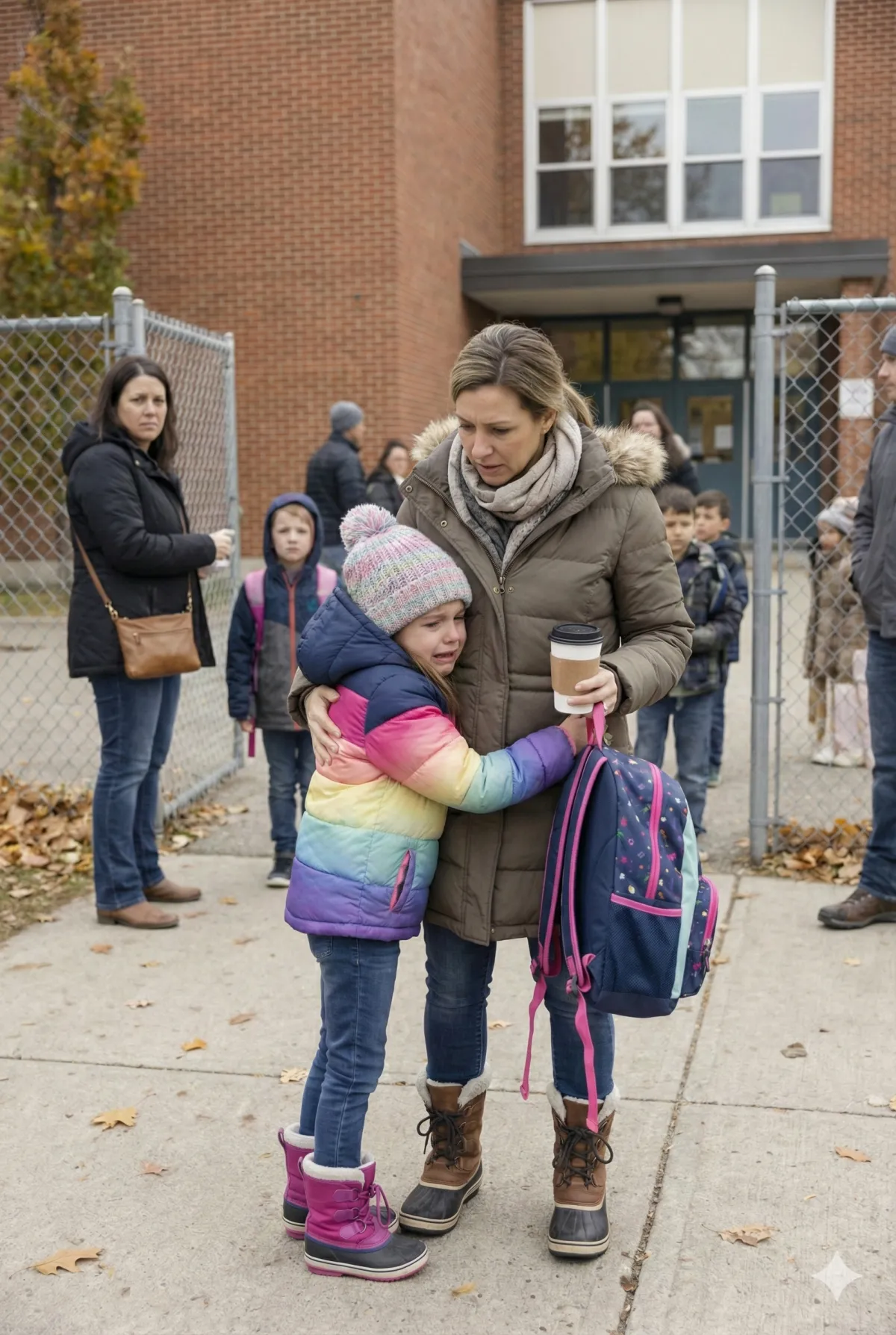
6-Year-Old Separation Anxiety at School
By around age 6, most kids can handle school separation with some support. When 6-year-old separation anxiety at school looks like:
Daily drop-off meltdowns that don’t improve
Frequent stomachaches or headaches before school
Begging you not to leave, clinging, hiding, or running after you
…it often means anxiety has become “stuck,” not just a normal phase.
This isn’t a parenting failure. It’s information about how your child’s particular nervous system works.
How to Help a 7-Year-Old with Separation Anxiety
School-age kids can:
Name what they’re afraid of (something happening to you, getting in trouble, being alone, not knowing what to do)
Learn simple coping tools, like:
Belly breathing
Positive self-talk (“I can do hard things,” “Mom always comes back”)
Visualization (imagining a safe place or you as a “calm bubble” around them)
Your body language matters as much as your words. If you’re visibly anxious or guilty at drop-off, your child’s body hears: “This might really be dangerous.”
Working on your own self-regulation is one of the most powerful treatments for child anxiety.
Teens and Separation Anxiety
Teenage anxiety around separation can look like:
Refusing sleepovers, trips, or college visits
Wanting to be home constantly
Masking fear as anger or defiance (“I just don’t want to go”)
Anxiety overlapping with depression (isolation, hopelessness, irritability)
How to help a teenager with anxiety and depression often includes addressing long-standing separation fears and building confidence in functioning away from home—while keeping you as a safe emotional anchor, not a rescuer.
A Simple Childhood Anxiety Symptoms Checklist
A childhood anxiety symptoms checklist helps you see patterns instead of guessing.
Track three areas: emotional, behavioral, and physical.
Emotional Signs
Excessive worry about everyday events
Worry about things that haven’t happened (or are very unlikely)
Reassurance-seeking (“Will I be okay?” “Are you sure?” repeatedly)
Catastrophic thinking (“It’ll be a disaster,” “Everyone will hate me”)
Irritability, anger, or frequent mood swings
Anxious kids often look more “angry” than “scared,” because their nervous system is on high alert.
Behavioral Signs
Avoiding school, activities, parties, or new situations
Backing out of commitments at the last minute
Clinginess and separation struggles
Constant checking or needing things “just right”
Repeated reassurance-seeking rituals
Avoidance is one of the biggest red flags. Each time your child avoids a feared situation, the anxiety gets reinforced.
Physical Signs
Stomachaches, headaches, nausea
Sleep problems (trouble falling asleep, staying asleep, or nightmares)
Fatigue
Appetite changes
Nervous habits (nail-biting, hair-pulling, skin-picking)
For teens, your “teenage anxiety test” might also include:
Withdrawing from friends and activities
Declining grades
Risky behaviors or substance use
Self-harm behaviors or talk of wanting to disappear
If you see several symptoms across multiple categories for several weeks, and they’re interfering with everyday life, it’s time to act.
When to Seek Professional Help for Child Anxiety
If you’re asking, “Is this serious enough for help?”—that’s worth listening to.
Consider a professional evaluation when:
Your child regularly refuses school or activities
Anxiety is disrupting friendships or family life
There are frequent panic-like episodes or intense meltdowns
Symptoms aren’t improving despite several weeks of consistent support at home
You see signs of depression or self-harm alongside anxiety
Getting help does not mean your child is broken or that you’ve failed. It means you’re taking mental health as seriously as physical health.
Professionals who can help:
Pediatrician: rules out medical issues, offers guidance and referrals
Child therapist/psychologist (CBT, exposure-based work): teaches your child skills and coaches you
Child psychiatrist: evaluates if medication might be helpful in severe or persistent cases
Early intervention is a key part of how to prevent anxiety in children from turning into long-term anxiety or depressive disorders.
Natural Ways to Support an Anxious Child
“How do I treat anxiety in my child naturally?” is a very common (and understandable) question.
Natural strategies can be very powerful, especially early on or with mild–moderate anxiety:
Movement: daily physical activity—walking, biking, playground time, sports, dancing
Sleep: consistent bedtime, calming routine, reduced evening screens
Nutrition: fewer sugary, ultra-processed foods; more protein, fiber, and healthy fats
Nature: regular outdoor time reduces stress for both kids and adults
Body tools: belly breathing, stretching, yoga, progressive muscle relaxation
Media boundaries: limit scary news, social media drama, and age-inappropriate content
But the core natural treatment is your regulated, calm presence.
Your child is a unique soul with their own purpose. Your job is not to erase every uncomfortable feeling; it’s to be a non-anxious, loving supporter as they learn to face fear and discover their own resilience.
That means:
Working on your own anxiety and triggers
Practicing your own coping skills
Letting go of perfection and focusing on connection over correctness
What You Can Do Right Now
If you’re worried about your child’s anxiety:
Connect first. Spend time doing something they enjoy, no agenda—just presence.
Notice patterns. Start a simple checklist of symptoms and when they show up.
Regulate yourself. Practice your own breathing, grounding, and self-talk. Your nervous system sets the tone.
Adjust routines. Prioritize sleep, movement, and predictable structure.
Reach out for help. If symptoms persist or impact daily life, talk with your pediatrician or a child mental health professional.
You are not alone in this, and you are not late. You’re right on time.
Frequently Asked Questions (FAQs)
Q. What are the most common childhood anxiety symptoms I should look for?
A. The most common symptoms include excessive worry about everyday things, physical complaints like stomachaches and headaches with no medical cause, sleep problems including trouble falling asleep or frequent nightmares, avoidance of situations that trigger fear, reassurance-seeking behaviors, irritability and emotional outbursts, difficulty concentrating, and clinginess or separation difficulties. You might also notice your child seems tense, has nervous habits like nail-biting, or experiences panic attacks with rapid heartbeat and trouble breathing. What matters most isn’t any single symptom but the pattern over time. If multiple symptoms persist for several weeks and interfere with your child’s daily life, that’s when anxiety has crossed from normal developmental fear into something that needs attention.
Q. How do I help my 6 year old with separation anxiety at school without making it worse?
A. The key is balancing empathy with confidence. Acknowledge your child’s feelings without letting the anxiety dictate decisions. Say something like “I know it feels scary when I leave, and you can handle this.” Create a consistent goodbye routine that’s brief and positive. Long, drawn-out goodbyes actually increase anxiety. Work with your child’s teacher to have a welcoming activity ready when your child arrives. Most importantly, manage your own emotions during drop-off. If you feel guilty or anxious about leaving, your child senses that and it confirms their fear that separation isn’t safe. Practice how to self regulate anxiety yourself through breathing and positive self-talk so you can model calm confidence. If the anxiety doesn’t improve within a few weeks of consistent approach, seek professional guidance.
Q. When should I worry that my child’s anxiety is serious enough for professional help?
A. Seek professional help when anxiety interferes with your child’s daily functioning for more than a few weeks. This includes refusing to go to school, avoiding activities they used to enjoy, struggling to maintain friendships, experiencing frequent panic attacks, or showing signs of depression alongside anxiety. If your child’s anxiety is causing significant distress for them or disrupting your family’s life, that’s reason enough to get an assessment. You should also seek help if you’ve tried supportive strategies at home for several weeks without seeing improvement, or if you feel overwhelmed and unsure how to help your child. Trust your parental instinct. If something feels off, it’s worth having a professional evaluate the situation. Early intervention prevents years of unnecessary suffering and builds resilience.
Q. What’s the difference between normal worry and anxiety that needs treatment?
A. Normal worry is proportional to the situation, temporary, and doesn’t significantly interfere with daily life. Your child might worry about a test but still takes it. They might feel nervous about a new situation but can be comforted and eventually participates. Anxiety that needs treatment is excessive, persistent, and limiting. The worry is out of proportion to the actual threat. It doesn’t respond to reassurance or improve with time. It causes your child to avoid important activities or experiences significant distress. The anxiety controls decisions and limits your child’s life. Another key difference is that normal worry comes and goes based on circumstances, while clinical anxiety is more constant, often spreading from one situation to others over time.
Q. Can I treat my child’s anxiety naturally without medication or therapy?
A. Many children benefit from natural approaches, especially when anxiety is mild to moderate and caught early. How to treat anxiety in child naturally includes increasing physical activity, ensuring adequate sleep, reducing sugar and processed foods, teaching breathing and relaxation techniques, and spending time in nature. Most importantly, focus on your own emotional regulation and the quality of your connection with your child. Your calm presence is the most powerful anxiety-reducer available. However, if anxiety is severe, persistent, or significantly impacting your child’s functioning, natural approaches alone may not be enough. Therapy provides specific skills and strategies that complement natural approaches. Medication is sometimes necessary for severe anxiety. The best approach often combines natural strategies, therapy, and sometimes medication, tailored to your child’s specific needs.
Q. How can I tell if my teenager’s behavior is normal adolescent moodiness or actual anxiety and depression?
A. Normal teenage moodiness comes and goes, usually in response to specific situations or hormonal fluctuations. Your teen might be irritable one day and fine the next. They still engage with friends, maintain grades, participate in activities they enjoy, and have good days mixed with challenging ones. How to help a teenager with anxiety and depression becomes necessary when you see persistent changes lasting weeks or months. Warning signs include withdrawing from friends and activities, declining grades, changes in sleep or eating patterns, constant irritability or sadness, expressing hopelessness, engaging in risky behaviors, or talking about self-harm. A teenage anxiety test administered by a professional can help clarify what’s happening. Trust your instinct. If your teen seems fundamentally different from who they were a few months ago, and the changes are persisting, seek an evaluation.
Q. What does a childhood anxiety symptoms checklist actually help me do?
A. A childhood anxiety symptoms checklist helps you move from vague worry to clear observation. Instead of feeling like something is wrong but not knowing what, you have concrete symptoms to track. This serves several important purposes. First, it helps you identify patterns you might miss in day-to-day chaos. You might notice symptoms cluster around certain situations or times. Second, it gives you objective data to share with professionals if you seek help. Specific examples are far more useful than general statements. Third, it helps you track whether things are improving or worsening over time. When you’re in the thick of parenting an anxious child, it’s hard to remember if this week was better than last week. Your checklist provides that perspective. Finally, it reduces your own anxiety by giving you a concrete tool and action steps rather than just worrying helplessly.
Q. What can I do right now if I’m worried about my child’s anxiety?
A. Start with connection. Spend time with your child doing something they enjoy, with no agenda other than being present together. This builds the safety and trust that allows them to open up about their worries. Next, look at your own emotional state. How to self regulate anxiety yourself is crucial because your child learns emotional regulation by watching you. Practice breathing exercises, take care of your own mental health, and notice when you’re projecting your own anxiety onto your child. Create predictable routines, as structure helps anxious children feel safe. Limit exposure to news and scary content. Make sure your child is getting enough sleep, physical activity, and time outdoors. If you’re seeing symptoms on a childhood anxiety symptoms checklist that persist for more than a few weeks, schedule an appointment with your pediatrician. You don’t have to figure this out alone, and seeking support is a sign of strength, not failure.
