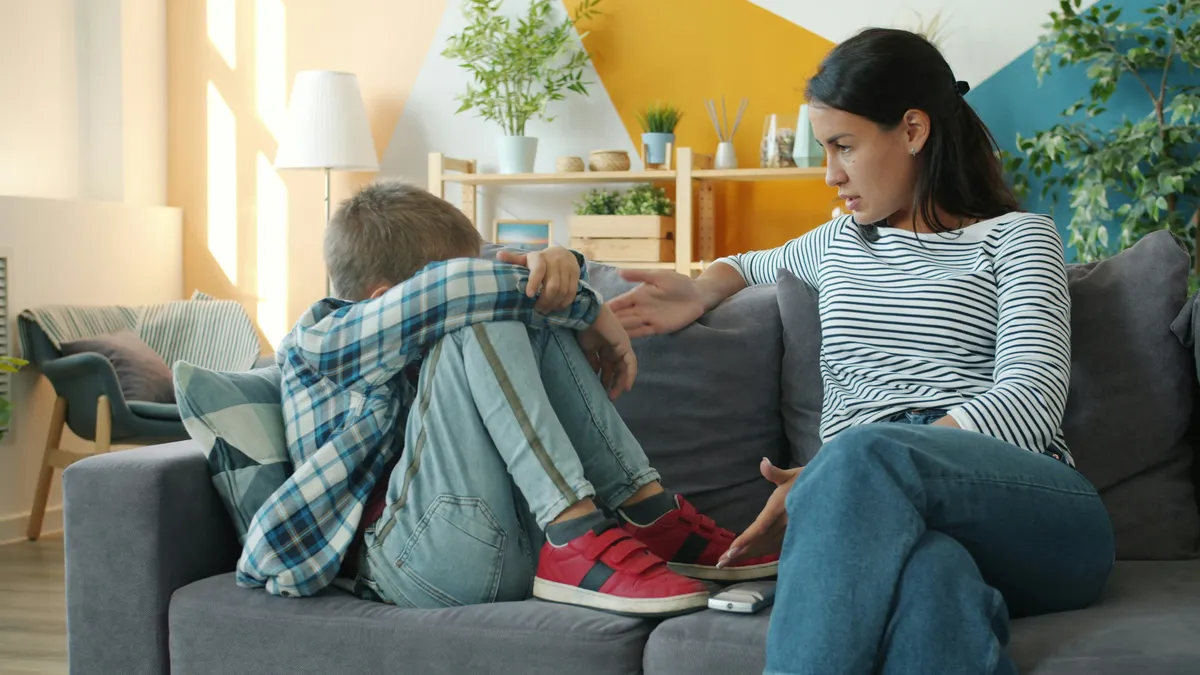
A Parent's Guide to Understanding, Not Just Stopping, Anger
The sound of your pre-teen’s anger can fill a room, leaving you feeling helpless, frustrated, and sometimes, even afraid. A door slams, a voice raises, and in an instant, the peace of your home is gone. Your first instinct is to make it stop. This is a natural reaction to a difficult situation.
This guide will show you how to calm a child down when angry by shifting your focus from control to connection. The common approach of issuing commands or punishments often fails because it addresses the symptom, not the source. Your child’s anger is a signal, a raw and unfiltered piece of communication about their internal world. As a child and adolescent psychiatrist, I have seen that real, lasting change for a child begins with the parent’s own growth and their ability to create a safe relational environment.
I once worked with a family where a teen’s anger masked deep despair. The breakthrough came not from managing the outbursts, but when the parents learned to sit with the anger and see the pain beneath it. That experience showed me that our response as parents is the most powerful tool we have for healing. This article will provide a clear process to turn these moments of conflict into opportunities for profound connection and growth for both you and your child.
Your Child’s Anger Is a Signal, Not a Defect
Before we can effectively respond to anger, we must reframe what it is. Anger in a child is rarely the primary emotion. It is a protective shield for more vulnerable feelings like fear, hurt, shame, or overwhelming frustration. When your child’s nervous system is flooded with these feelings, they experience what is known as emotional dysregulation. They are not choosing to be difficult; they have lost the capacity to manage their internal state.
Learning how to calm a dysregulated child begins with seeing their behavior as a sign of distress, not defiance. Think of your child’s anger as a canary in the coal mine. It is a sensitive indicator that something in their world, or even in the broader family system, is causing stress. Is there pressure at school? A conflict with a friend? Or perhaps the anger is reflecting unspoken tension within the home. When we see the anger as a signal, our objective changes from extinguishing a fire to understanding what started it.
To calm a child down when angry, first regulate your own emotions to provide a safe space. Then, connect with them through empathy and validation, acknowledging their feelings without judgment. Once they feel seen and heard, you can help them identify the root cause of their anger and guide them toward a solution.
This perspective shift is the foundation of a more effective approach. You move from the role of a disciplinarian to that of an emotionally attuned guide. Your child learns that their big feelings are not something to be ashamed of but are valid experiences that can be understood and managed with your help.
A 3-Step Process for How to Calm a Child Down When Angry
When your child is in the middle of an emotional storm, your response is critical. A calm, connected presence can de-escalate the situation, while a reactive one will only add fuel to the fire. This three-step process is designed to help you move from a state of conflict to one of connection.
Step 1: Regulate Yourself First
Your child cannot find calm if you are in a state of chaos. This is not about being a perfect, emotionless parent. It is about recognizing that your nervous system directly impacts your child’s. This concept is called co-regulation. Your calm becomes an anchor for them in their emotional storm. Before you say or do anything, take a moment to ground yourself.
Take two deep, slow breaths. Feel your feet planted firmly on the floor. Notice the physical sensation of the ground beneath you. This simple act sends a signal to your own nervous system that you are safe, which allows you to think more clearly and respond with intention instead of instinct. Your ability to self-regulate is the single most important factor in helping your child.
Step 2: Connect Before You Correct
The instinct to correct the behavior, like yelling or throwing something, is strong. But correction in a moment of high emotion is almost always received as criticism, which escalates the conflict. The priority is to connect with the feeling underneath the behavior. This is how you learn how to connect with your child emotionally in the moments that matter most.
Get down on their level if possible and use a soft tone. Validate the emotion, not the action. Instead of saying, “Stop yelling at me,” try saying, “I see you are so angry right now. It looks like you’re about to explode.” This simple acknowledgment tells your child that you see them and that their feeling is real. You are not condoning the behavior. You are creating the emotional safety required to address it later. You are building a bridge to their heart, not a wall against their anger.
Ready to reconnect?
Three Ways to Work With Dr. Caudill
The Parent Archive — access a free learning portal with book summaries, video lessons, actionable PDFs, and guest speakers curated by Dr. Marissa Caudill.
The Tween Scene is a group coaching program for parents of 9–12 year olds. Connect with a community, build real skills, and stop feeling alone in this.
One-on-One Parent Coaching offers personalized support tailored to your family's unique dynamics — with direct access to Dr. Caudill.
Enter the Parent Archive Learn About The Tween Scene
Step 3: Listen to Understand, Not to Reply
Once the initial intensity has passed and your child feels seen, the opportunity for understanding opens up. The goal of this step is not to solve the problem immediately but to listen. Resist the urge to lecture, teach, or offer solutions right away. Your job is to be a curious and compassionate detective of their inner world.
Ask open-ended questions that invite reflection. You might say, “That sounds so frustrating. What happened right before you started feeling this way?” or “I can hear how much that hurt. Tell me more about it.” Listen to their words, and listen for the feelings behind them. By giving them the space to be heard without judgment, you are teaching them a critical skill: how to process their emotions through connection. This approach to how to calm a child down when angry transforms a moment of crisis into a lesson in emotional intelligence.
Building Long-Term Emotional Health in Your Home
Managing angry outbursts is only one part of the equation. The ultimate goal is to create a home environment that fosters emotional resilience and reduces the frequency and intensity of these moments. This involves proactive, long-term strategies that build a foundation of safety and connection. When you learn how to help child emotional volatility at home, you are investing in their future well-being.
These practices help build strong Emotional Health for kids by making emotional awareness a part of your family culture.
Create Regular, Dedicated Connection Time. Schedule 10-15 minutes of one-on-one time with your child each day, free from distractions. Let them lead the activity. This consistent investment in your relationship builds a deep well of trust that you can draw from during difficult times.
Model Healthy Emotional Expression. Children learn more from what we do than what we say. Let your child see you manage your own frustration or disappointment in a healthy way. You can say things like, “I’m feeling really frustrated right now, so I’m going to take a few deep breaths before I respond.”
Help Them Build an Emotional Vocabulary. Many children resort to anger because they lack the words for other feelings. Talk about emotions openly. Name your own feelings and help them name theirs. Use a feelings wheel or chart to expand their vocabulary beyond “mad” and “sad.”
Examine Your Own Stress Levels. Your child’s emotional state is often a reflection of the family’s emotional climate. Honestly assess your own stress and the overall tension in your home. Taking steps to manage your own well-being is one of the greatest gifts you can give your child.
Frequently Asked Questions About Child Anger
How do I help my child regulate their emotions?
You help your child regulate their emotions primarily through co-regulation. This means staying calm and present yourself when they are upset. Model deep breathing, use a gentle voice, and offer physical comfort if they are open to it. Over time, they internalize your calm response and develop the neural pathways to soothe themselves. You can also proactively teach them grounding techniques, like naming five things they see, when they are not in a state of distress.
How can I help my tween with emotions?
Tweens need both connection and autonomy. Validate their feelings without judgment, as their emotional experiences are often intense and confusing. Say, “It sounds like you felt really embarrassed and angry when that happened.” At the same time, give them space to process. Offer to talk but respect their need for privacy. The key is to be a consistent, available, and non-reactive presence they know they can turn to when they are ready.
What is emotional dysregulation in a 10 year old?
Emotional dysregulation in a 10-year-old is an emotional response that is much bigger than the situation warrants. It might look like an explosive tantrum over a minor disappointment, prolonged crying that is difficult to soothe, or sudden, intense anger. The child is not “being bad.” Their nervous system is overwhelmed, and they have temporarily lost the ability to manage their emotional state in a way that is appropriate for their age.
What to do if I can’t cope with my child?
First, acknowledge that it is okay to feel this way. Parenting is incredibly difficult. If you feel you cannot cope, your first step is to ensure everyone is safe. If necessary, step away for a few moments to a different room to regulate yourself. Reach out for support. Talk to your partner, a trusted friend, a therapist, or a parenting coach. You do not have to handle this alone, and getting support for yourself is a critical part of being able to support your child.
Your Role Is the Key to Their Resilience
The journey of parenting a pre-teen is full of intense moments that test our patience and resolve. It is easy to see their anger as a problem to be fixed or a behavior to be eliminated. I believe, however, that these moments are invitations. They are invitations to look deeper, to connect more fully, and to grow alongside our children.
By shifting your goal from controlling their anger to understanding it, you provide the emotional safety they need to mature. You teach them that all feelings are acceptable, but not all behaviors are. Your calm, connected presence becomes the blueprint for their own developing self-regulation. This is not a quick fix. It is a profound, long-term investment in your relationship and in your child’s mental health. You are not just stopping a tantrum. You are building a resilient, emotionally intelligent human being.
Your next step
You Don't Have to Navigate This Alone
The pre-teen years can feel like you are losing the child you knew. But within this challenge lies an invitation to build a new, more mature relationship that will carry your family into the future.
The Parent Archive — free learning portal and resource library for parents
The Tween Scene — group coaching for parents of 9–12 year olds
One-on-One Parent Coaching — personalized support tailored to your family
